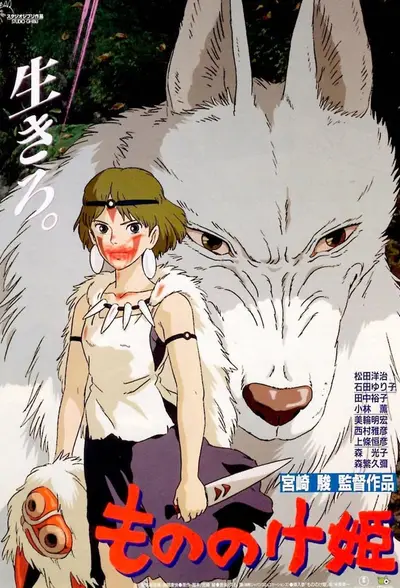
Princess Mononoke and Spirited Away heavily influenced ATLA's depiction of the Spirit World, environmentalism, and nuanced, non-traditional morality (where villains are given humanizing depth)
Animated Series· 2005· Fantasy
by Michael Dante DiMartino, Bryan Konietzko
Avatar: The Last Airbender: it draws on 8 recorded sources.
The works this one is recorded as drawing on.
Princess Mononoke and Spirited Away heavily influenced ATLA's depiction of the Spirit World, environmentalism, and nuanced, non-traditional morality (where villains are given humanizing depth)
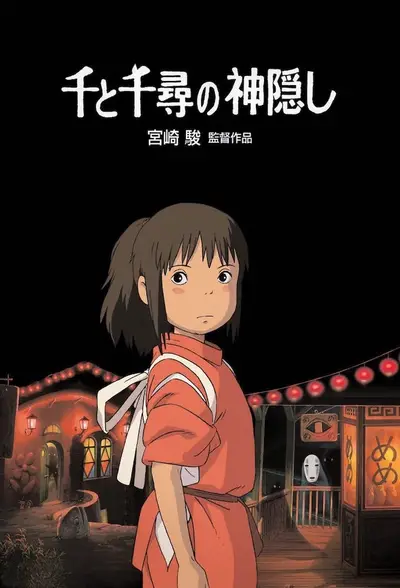
Princess Mononoke and Spirited Away heavily influenced ATLA's depiction of the Spirit World, environmentalism, and nuanced, non-traditional morality (where villains are given humanizing depth)

Appa's six-legged design from Avatar: The Last Airbender was a direct homage to the Catbus from Hayao Miyazaki's My Neighbor Totoro. The show's creators and artists noted that figuring out the anatomy of a multi-legged mammal was tough, so they looked directly to the iconic six-legged Catbus for inspiration when designing Appa's body and movement. While Appa is officially a hybrid of a bison and a manatee, his structure and multi-legged shuffle heavily echo the classic Studio Ghibli creation.
Events, places, movements and ideas outside fiction that this work is recorded as drawing on.
Real world
The four bending arts are based directly on four distinct styles of Chinese martial arts, supervised by Sifu Kisu to ensure technical authenticity:
Real world
The Water Tribes are inspired by Inuit, Yupik, and indigenous Circumpolar cultures, seen in their clothing, architecture (igloos/ice carving), and reliance on sea hunting.
Real world
The Earth Kingdom draws heavily from Imperial China (Ming and Qing Dynasties), featuring landmark architecture like the Forbidden City (Ba Sing Se) and the Great Wall.
Real world
The Air Nomads are modelled on Tibetan Buddhist monks and Hindu monastic traditions, emphasizing detachment, spiritual enlightenment, and vegetarianism.
Real world
The Fire Nation is modelled on Meiji-era industrializing Japan, reflecting rapid technological advancement, naval supremacy, and imperial expansionism.