Nonfiction· 1532· Philosophy

Il principe (The Prince)

by Niccolò Machiavelli

Il principe (The Prince): 1 recorded work traces back to it, and it draws on 3 recorded sources.

Open on the map

What Il principe (The Prince) influenced

Works that record this one as a source, with the evidence a contributor gave.

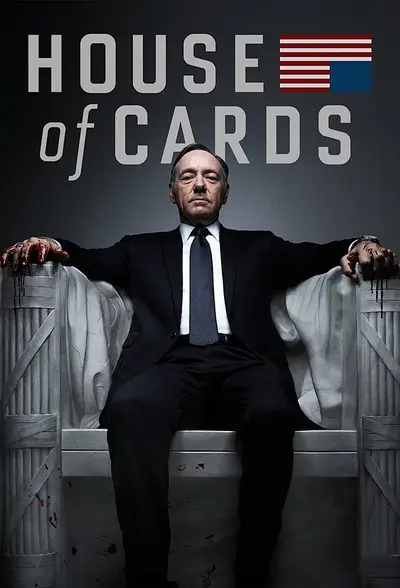
House of Cards

TV Series · 2013

InfluenceMEDIUM

The show's method is Machiavelli's: politics described as it is practised rather than as it is justified. Frank Underwood's asides to camera are a running commentary on how power is actually acquired and kept, which is the form of The Prince, a manual addressed to a ruler about means. The specific inheritance is the separation of effectiveness from virtue. Machiavelli's argument that a prince must learn how not to be good, and use it according to necessity, is the premise the series dramatises and then tests to destruction. The debt runs through the British original and Dobbs's novel as well as directly.
What influenced Il principe (The Prince)

The works this one is recorded as drawing on.

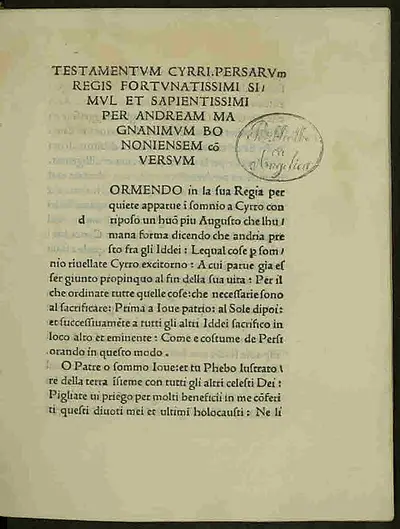
Κύρου παιδεία Cyropaedia

Nonfiction · -370

InfluenceMEDIUM

Machiavelli names Xenophon's Cyrus in The Prince as a model a new ruler should study, and Cyrus is one of the handful of examples he returns to when arguing how a man without inherited title takes and holds a state. The relationship is a disagreement as much as a debt, which is what makes it worth drawing. The Cyropaedia is an idealising education of a ruler, arguing that Cyrus succeeded by generosity, justice and being loved. Machiavelli reads the same career and draws the opposite lesson about fear and love, and scholars have long noted that his Cyrus does things Xenophon's book quietly records but does not commend. He is reading the text against its own moral.

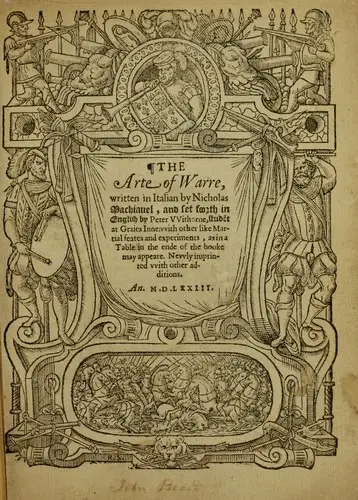
Dell'arte della guerra The Art of War

Nonfiction · 1521

InfluenceMEDIUM

The Art of War is the only one of Machiavelli's major political books published in his lifetime, and it argues the case The Prince assumes: that a state which relies on mercenaries is defenceless, and that a citizen militia is the only reliable foundation of power. The Prince states the conclusion as a rule for a ruler; the earlier book is where it is worked out, drawing on Roman practice and on Machiavelli's own attempt to raise a Florentine militia. The relationship runs the other way from the publication dates, which is why the claim rests on the composition order rather than on the printing.

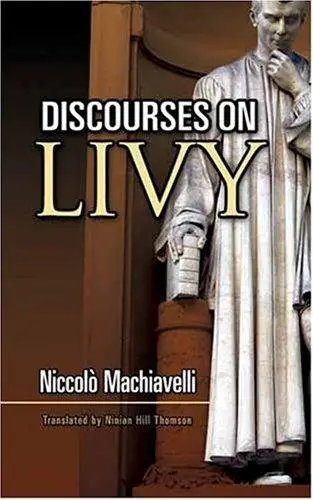
The Discourses and The Prince were written in the same years out of the same reading of Livy, and Machiavelli refers in The Prince to having discussed republics elsewhere at length. They are usually read as a pair that disagrees: the Discourses argues that a republic with contesting classes is more durable than a principality, while The Prince advises a single ruler on holding a state. Reading either alone produces the caricature. The method is identical in both, which is to derive rules from what Roman and contemporary rulers actually did rather than from what they should have done.

About the work

Il principe (The Prince)

The Prince is a 16th-century political treatise written by the Italian diplomat and political philosopher Niccolò Machiavelli in the form of an instruction guide for new princes. Many commentators have viewed that one of the main themes of The Prince is that immoral acts are sometimes necessary to achieve political glory.