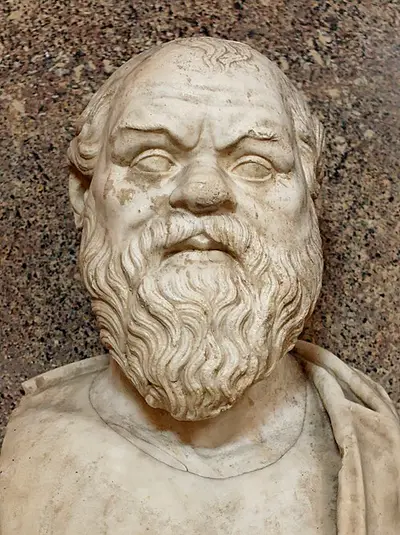
Ἀπολογία Σωκράτους πρὸς τοὺς Δικαστάς Apology of Socrates to the Jury
Nonfiction · -400
InfluenceMEDIUM
The two dialogues are the beginning and the end of one sequence: the Apology is Socrates defending himself at the trial, the Phaedo is the last afternoon in the cell and the hemlock. The Phaedo is written to answer the question the Apology leaves open. At the trial Socrates says that death is either nothing or a journey, and declines to claim he knows which. The later dialogue spends its length arguing that the soul is immortal, so that the composure the Apology only asserted is given a reason. Read in order they are a single argument about why a philosopher need not fear the verdict.