Book· 1813· Romance

Pride and Prejudice

by Jane Austen

Pride and Prejudice: 6 recorded works trace back to it.

Open on the map

What Pride and Prejudice influenced

Works that record this one as a source, with the evidence a contributor gave.

Bridget Jones

Book · 1996

InfluenceHIGH

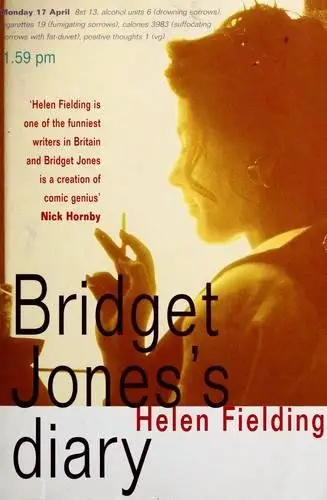
Fielding has never made any secret of it: the column that became the novel borrowed Austen's plot wholesale because she needed a structure and thought nobody would notice.

  • Mark Darcy carries the name, the rudeness at a first meeting, the unexplained good deed later, and the second-chance proposal
  • Daniel Cleaver is Wickham: charming, plausible, and already known to Darcy
  • Bridget's mother is Mrs Bennet with a shopping channel

The joke closed on itself when Colin Firth, who had played Darcy in the 1995 serial, was cast as Mark Darcy in the films, and Fielding wrote a scene in the sequel where Bridget interviews him about it.

Bridget Jones

Film · 2001

InfluenceHIGH

Helen Fielding has been open that Bridget Jones's Diary is Pride and Prejudice with the plot borrowed wholesale, and the borrowing is not disguised: the cold, rude, rich man who turns out to be decent is called Mark Darcy. The film closes the loop. Colin Firth, who had played Austen's Darcy in the 1995 television adaptation, plays Mark Darcy here, and the casting is the joke. The charming rival who is actually the villain, the family pressure to marry, and a heroine whose first judgements are all wrong are Austen's structure carried over intact.

Pride and Prejudice

TV Series · 1995

AdaptationHIGH

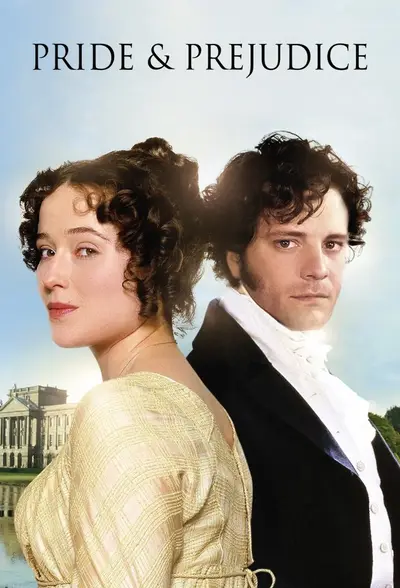
Andrew Davies's six-part BBC serial, with Jennifer Ehle and Colin Firth. Six hours is long enough to be nearly complete, and it is: the letters, the Gardiners, Lydia's elopement and the second proposal all survive at length. The lake is not in the novel. Davies invented Darcy diving into the water at Pemberley and meeting Elizabeth wet through, and it became the most famous thing about the adaptation and arguably about the character. A useful case of an adaptation adding something that then attaches itself permanently to the original.

Pride & Prejudice

Film · 2005

AdaptationHIGH

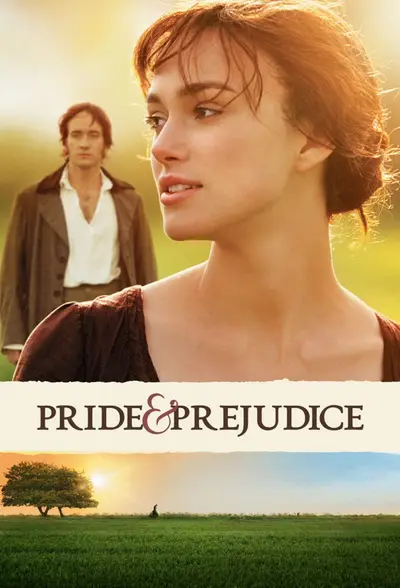
Joe Wright's film adapts Austen's novel into a single feature, which forces the compression that distinguishes it from the television versions: five sisters, two proposals and a reversal of judgement in a little over two hours. Its visible choice is dirt. The Bennet household is working rather than genteel, with livestock in the yard and hems that show it, against an adaptation tradition that had played the family as comfortably respectable. The class gap the plot turns on becomes legible in the set instead of only in the dialogue.

Bridgerton

TV Series · 2020

InfluenceMEDIUM

Bridgerton is Regency romance, and Austen is the reason the genre exists in that form. Julia Quinn, whose novels the series adapts, has named Austen as the writer who made her want to write, and the books are built on the conventions Pride and Prejudice fixed. What is Austen's:

  • The marriage market as the plot engine: a family with several daughters, limited money, and a season in which matches must be made
  • A large family with ranked siblings whose prospects depend on each other's conduct
  • Reputation as the real stake, with a single incident able to ruin a household
  • The central pairing built on an initial misreading between a spirited young woman and a proud, withholding man of higher rank
  • Balls, calls and promenades as the only places where anything can happen

Filed MEDIUM: this is a genre's foundation showing through an adaptation of novels written inside it, rather than one work reworking another.

The Twilight Saga

Book · 2005

InfluenceMEDIUM

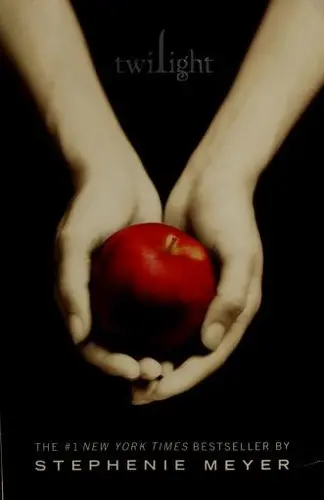
Stephenie Meyer has said each book of the saga was built on a classic, and Twilight on Pride and Prejudice.

  • A first meeting that goes badly, with Edward's apparent disgust in the biology class playing the part of Darcy's pride at the assembly
  • A heroine who misreads the hero's reserve and is corrected by what she learns about him
  • The courtship as a sequence of misunderstandings rather than obstacles

Filed MEDIUM: it shapes the first book of four.

About the work

Pride and Prejudice

A novel of manners, it follows the character development of Elizabeth Bennet, the protagonist of the book, who learns about the repercussions of hasty judgments and comes to appreciate the difference between superficial goodness and actual goodness.