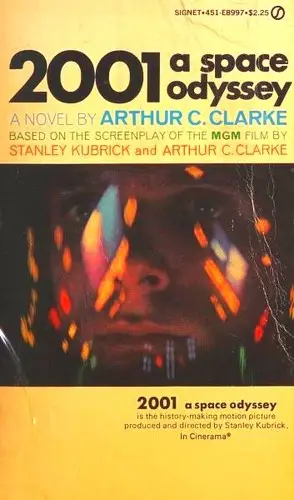
Liu Cixin has said, repeatedly and in those terms, that Arthur C. Clarke is why he writes science fiction, and has named 2001 as the book that did it. He has described going outside after finishing it and looking at the sky differently. What the trilogy takes from Clarke:
- Scale as the subject. Both treat humanity as small against a universe that is not arranged around it, and both are willing to end a section by simply moving forward by an era
- An intelligence so far ahead that its actions are indistinguishable from physics, and no attempt to make it comprehensible or motivated in human terms
- Hard physical extrapolation carried all the way through rather than used as decoration, and a willingness to stop the story to explain it
- The long view of a civilisation's whole life, which is what Death's End does at the end of the third book
Filed HIGH: the debt is to the shape of the imagination rather than to a plot, and Liu names it himself.