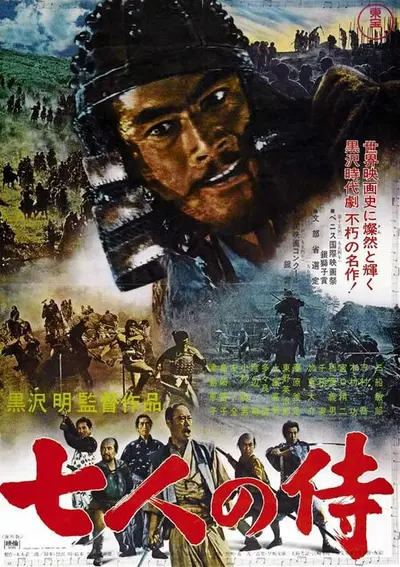
The last Samourai is built on the international mythology of the samurai that Kurosawa created for the world, rather than historical Japanese texts. It inherits the genre's defining themes: a traditional warrior class rendered obsolete by rapid modernization, and a deep existential mourning for a passing era. Seven Samurai's ending famously states this theme first, when the surviving leader looks at the graves of his comrades and notes that the common people won, while the samurai lost. The Last Samurai re-stages that philosophical argument as an entire Hollywood plot, detailing the tragic erosion of feudal honor in the face of a changing world. Filed MEDIUM. The honest limit is that the debt is to Kurosawa broadly—with Seven Samurai carrying the core thematic weight on this map, while the visual tragedy of the futile cavalry charge against modern firearms echoes Kurosawa's later masterpiece, Kagemusha (1980).