BookSeries· 1968· Science Fiction

Space Odyssey

by Arthur C. Clarke

Space Odyssey: 3 recorded works trace back to it.

Open on the map

What Space Odyssey influenced

Works that record this one as a source, with the evidence a contributor gave.

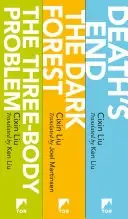
Liu Cixin has said, repeatedly and in those terms, that Arthur C. Clarke is why he writes science fiction, and has named 2001 as the book that did it. He has described going outside after finishing it and looking at the sky differently. What the trilogy takes from Clarke:

  • Scale as the subject. Both treat humanity as small against a universe that is not arranged around it, and both are willing to end a section by simply moving forward by an era
  • An intelligence so far ahead that its actions are indistinguishable from physics, and no attempt to make it comprehensible or motivated in human terms
  • Hard physical extrapolation carried all the way through rather than used as decoration, and a willingness to stop the story to explain it
  • The long view of a civilisation's whole life, which is what Death's End does at the end of the third book

Filed HIGH: the debt is to the shape of the imagination rather than to a plot, and Liu names it himself.
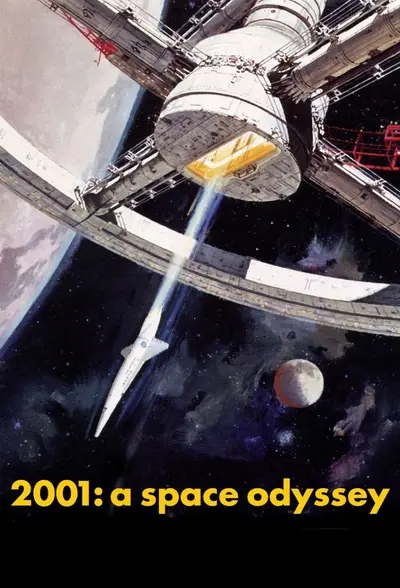
2001: A Space Odyssey

Film · 1968

AdaptationHIGH

Written alongside each other rather than one after the other. Clarke and Kubrick began in 1964 from Clarke's 1951 short story The Sentinel, and Clarke drafted the novel as the screenplay developed, with each feeding the other. The film premiered in April 1968; the novel was published a few months later. The arrow points from the book because that is where the material came from, not because of the dates. Clarke's prose came first and Kubrick shot from it. Where they differ is instructive: the novel explains everything, states plainly that the destination is Saturn and that Bowman passes through a star gate. The film explains nothing and goes to Jupiter because Saturn's rings could not be made convincing.

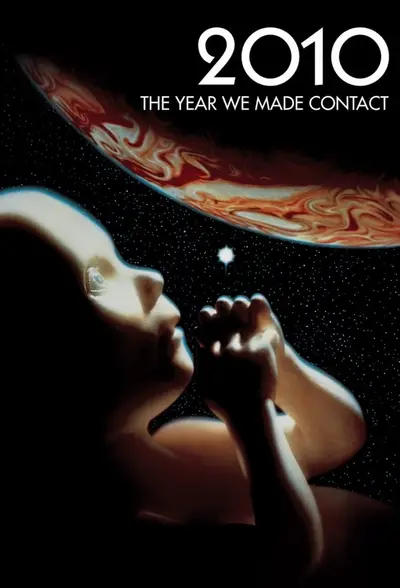
2010: The Year We Make Contact

Film · 1984

AdaptationMEDIUM

Adapted from Clarke's 2010: Odyssey Two, the second novel of the sequence, with Clarke closely involved. It answers the questions the 1968 film deliberately left open, which is the reason it is usually discussed as a different kind of object from its predecessor rather than as a sequel to it.

About the work

Space Odyssey

This is a series.

It was developed concurrently with Stanley Kubrick's film version and published after the release of the film. Clarke and Kubrick worked on the book together, but eventually only Clarke ended up as the official author. An elaboration of Clarke and Kubrick's collaborative work on this project was made in the 1972 book The Lost Worlds of 2001.