Short Story· 1922· Literary

吶喊 (Call to Arms)

by 魯迅 Lu Xun

吶喊 (Call to Arms): 2 recorded works trace back to it.

Open on the map

What 吶喊 (Call to Arms) influenced

Works that record this one as a source, with the evidence a contributor gave.

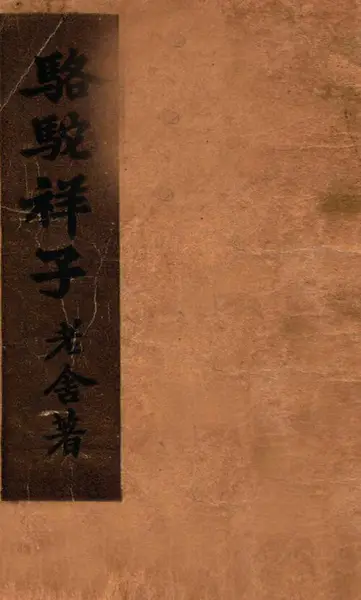
駱駝祥子 Rickshaw Boy

Book · 1937

InfluenceHIGH

Call to Arms is the founding collection of modern Chinese vernacular fiction: A Madman's Diary was the first short story written in the everyday language rather than in classical Chinese, and The True Story of Ah Q is the most read piece of Chinese fiction of its century. What Lu Xun established, and what Lao She then worked inside, was a form for writing about ordinary urban poverty without either sentimentality or the classical register: the protagonist who is not admirable, whose defeat is social rather than tragic, and whose self-deception is the writer's real subject. Rickshaw Boy is that method applied at novel length to a Beijing puller. Lao She acknowledged the debt to Lu Xun repeatedly, including in the memorial essays he wrote after his death.
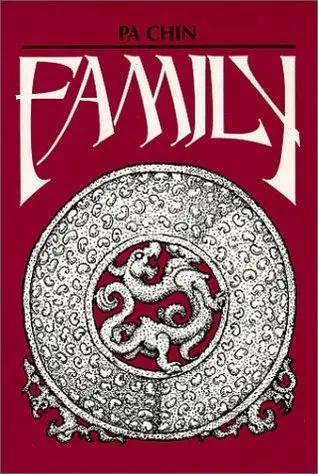
家 Family

Book · 1933

InfluenceHIGH

Ba Jin was part of the generation formed by the May Fourth movement that Lu Xun's fiction had done most to shape, and Family is the novel that carried its central argument into a bestseller. The argument is the one Lu Xun made in A Madman's Diary and A Small Incident: that the Confucian family order is not merely outdated but actively devouring the young, and that the deference it demands is the mechanism. Ba Jin's three brothers in a Chengdu gentry household are that thesis worked out as a plot, with the eldest destroyed by obedience. Ba Jin wrote about Lu Xun's influence on his generation directly, and edited and promoted his work for decades afterwards.

About the work

吶喊 (Call to Arms)

Lu Xun (simplified Chinese: 鲁迅; traditional Chinese: 魯迅; pinyin: Lǔ Xùn) or Lu Hsün (Wade-Giles), was the pen name of Zhou Shuren(September 25, 1881 - October 19, 1936) is one of the major Chinese writers of the 20th century. Considered by many to be the founder of modern Chinese literature, he wrote in baihua (the vernacular) as well as classical Chinese. Lu Xun was a short story writer, editor, translator, critic, essayist and poet. In the 1930s he became the titular head of the Chinese League of Left-Wing Writers in Shanghai. Lu Xun's works exerted a very substantial influence after the May Fourth Movement to such a point that he was lionized by the Communist regime after 1949. Mao Zedong himself was a lifelong admirer of Lu Xun's works. Though sympathetic to the ideals of the Left, Lu Xun never actually joined the Chinese Communist Party. Lu Xun's works are known to English readers through numerous translations, especially Selected Stories of Lu Hsun translated by Yang Hsien-yi and Gladys Yang.