Play· 1879· Drama

Et dukkehjem (A Doll's House)

by Henrik Ibsen

Et dukkehjem (A Doll's House): 1 recorded work traces back to it.

Open on the map

What Et dukkehjem (A Doll's House) influenced

Works that record this one as a source, with the evidence a contributor gave.

Death of a Salesman

Play · 1949

InfluenceHIGH

Miller wrote about his debt to Ibsen for fifty years and adapted An Enemy of the People the year after Salesman opened, which is as direct a statement of allegiance as a playwright makes. What he took is Ibsen's method: a household in an ordinary sitting room, a past that has been paid for in secret, and a play whose action is the arrival of the bill. Ibsen builds the whole of A Doll's House on a forged signature years old; Miller builds Salesman on Willy's Boston hotel room and Biff finding out. The difference Miller insisted on is the form. Ibsen keeps to the room and the clock; Salesman lets the past walk on stage and share it, which is the thing Ibsen made possible and did not do.

About the work

Et dukkehjem (A Doll's House)

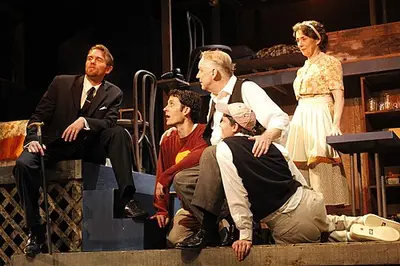
Nora Helmer, a childlike wife and mother accustomed to an existence built around her husband Torvald, comes to confront the truth of her marriage, in Henrik Ibsen's groundbreaking 1879 play. A Doll's House is a three-act play written by Norwegian playwright Henrik Ibsen. It premiered at the Royal Danish Theatre in Copenhagen, Denmark, on 21 December 1879, having been published earlier that month. The play is set in a Norwegian town c. 1879.