Play· 1949· Drama

Death of a Salesman

by Arthur Miller

Death of a Salesman: it draws on 2 recorded sources.

Open on the map

What influenced Death of a Salesman

The works this one is recorded as drawing on.

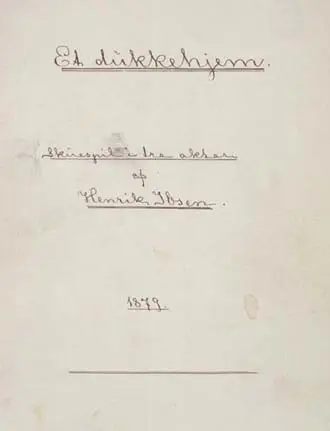
Et dukkehjem A Doll's House

Play · 1879

InfluenceHIGH

Miller wrote about his debt to Ibsen for fifty years and adapted An Enemy of the People the year after Salesman opened, which is as direct a statement of allegiance as a playwright makes. What he took is Ibsen's method: a household in an ordinary sitting room, a past that has been paid for in secret, and a play whose action is the arrival of the bill. Ibsen builds the whole of A Doll's House on a forged signature years old; Miller builds Salesman on Willy's Boston hotel room and Biff finding out. The difference Miller insisted on is the form. Ibsen keeps to the room and the clock; Salesman lets the past walk on stage and share it, which is the thing Ibsen made possible and did not do.

Οἰδίπους Τύραννος Oedipus Rex

Play · -429

Reaction againstMEDIUM

Miller published the argument. Tragedy and the Common Man appeared in the New York Times in February 1949, weeks after Salesman opened, and it is a direct answer to the critics who said a salesman was too small to be tragic. His case is that the classical requirement of rank is an accident of who was writing, not a law: the tragic feeling comes from a man laying down his life to secure his sense of personal dignity, and a salesman can do that as completely as a king. Willy's insistence that he is well liked is the flaw held in exactly the place Sophocles puts Oedipus's certainty. Recorded as a reaction rather than an influence because the play is written to contradict the model, and because Miller said so in print at the time.

About the work

Death of a Salesman

One man and his family are caught up in the pressures and delusions of living the American Dream. Miller's play is the story of a traveling salesman whose illusions of picture-perfect business and family life cave in on him. The play addresses a variety of themes, such as the American Dream, the anatomy of truth, and infidelity. It won the 1949 Pulitzer Prize for Drama and Tony Award for Best Play. Since its premiere, the play has been revived on Broadway five times, winning a to-this-day unprecedented four Tony Awards for Best Revival. It has been adapted for the cinema ten times. In 1999, New Yorker drama critic John Lahr said that with 11 million copies sold, it was "probably the most successful modern play ever published."