Book· 1485· Fantasy

Le Morte d'Arthur

by Thomas Malory

Le Morte d'Arthur: 6 recorded works trace back to it.

Open on the map

What Le Morte d'Arthur influenced

Works that record this one as a source, with the evidence a contributor gave.

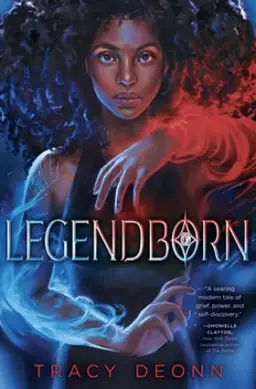
The Legendborn Cycle

Book · 2020

InfluenceHIGH

Malory is where the Arthurian legend stopped being scattered and became one story, and it is the version Legendborn is arguing with. What Le Morte d'Arthur fixed, out of French romance and Welsh material that did not agree with each other: the Round Table as an order with named seats, the sword and the succession, Merlin, Lancelot and Guinevere, the Grail quest as the thing that breaks the fellowship, and the fall. Everything an English-language Arthurian novel can assume a reader knows comes from this book. Tracy Deonn uses all of it and then asks the question Malory never has to: who inherits it. Her Order of the Round Table is a secret society at a North Carolina university whose members claim bloodline descent from the knights, and the inheritance rules are a mechanism of exclusion. Bree's claim comes through a line of Southern rootwork that predates and outranks theirs. The legend is the frame. The book is about who gets written into it.
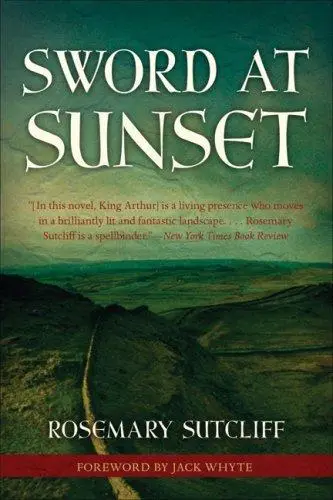
Sword at Sunset

Book · 1963

InfluenceHIGH

Sutcliff's novel is Arthur written deliberately underneath Malory: a Romano-British cavalry commander called Artos holding the line after the legions have gone, with no Round Table, no Grail and no Lancelot. The Malory material is kept where it can be given a historical cause. The sword, the sister, the incestuous begetting of Medraut, the betrayal and the last battle are all there; the enchantments are not. Guenhumara's affair is with Bedwyr, because Lancelot is a twelfth-century French addition and Sutcliff is writing before it. That is a debt rather than a rejection: the book only works if the reader knows the legend it is stripping, and Sutcliff said she was after the man the stories had grown around.

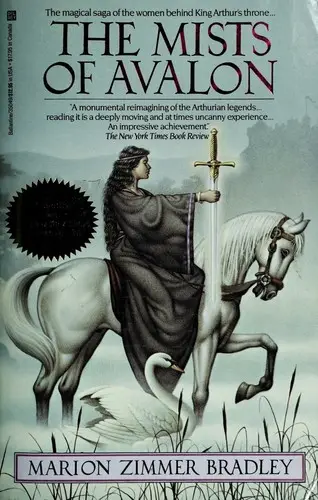
Avalon

Book · 1983

InfluenceHIGH

The Mists of Avalon is Malory retold from the other side of the room. Every event is his: Uther and Igraine, the sword, Arthur's marriage, Lancelot and Guinevere, the Grail, Mordred, and the barge to Avalon. What Bradley changes is the point of view and therefore the meaning. Morgaine, a villain in Malory, is the narrator; Guinevere's piety is a character rather than a fault; and the Grail quest reads as the moment Christianity finishes displacing the older religion the women serve, which in Malory is simply the good ending. It did for Arthurian fiction what Wide Sargasso Sea did for Jane Eyre, and almost every feminist retelling of a legend since works the same way.

Excalibur

Film · 1981

AdaptationHIGH

John Boorman's film is credited as adapted from Malory's Le Morte d'Arthur, and it follows Malory's arc from Uther's night at Tintagel to Camlann: the sword in the stone, the Round Table, Lancelot and Guinevere, the Grail quest and Mordred's rebellion. Its best-known change is at the end, where Perceval rather than Bedivere returns Excalibur to the Lady of the Lake.

The Once and Future King

Book · 1938

InfluenceHIGH

White's sequence is a retelling of Malory from the boyhood of Arthur to the last night before the final battle. He names Le Morte d'Arthur in his own text and brings Malory himself on as a character at the end, as the boy Arthur sends away to carry the story on.

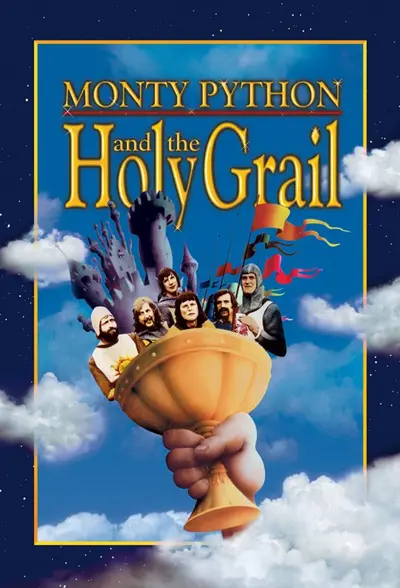
Monty Python and the Holy Grail

Film · 1975

InfluenceMEDIUM

The parody needs the text to be parodying, and it is this one: Arthur assembling named knights, the sword and the claim to kingship, the vow, the quest for the Grail announced from on high, and the individual knights peeling off into their own adventures. The jokes are aimed at the romance conventions Malory fixed. The Black Knight is the chivalric refusal to yield taken literally; Galahad's chastity is treated as a problem to be solved; Lancelot's rescue is a massacre because that is what the original is if you count the bodies. Filed MEDIUM: the Pythons were working from the whole Arthurian tradition and from medieval texts generally, and Malory is its central English source rather than a book they adapted.

About the work

Le Morte d'Arthur

Le Morte d'Arthur is a 15th-century Middle English prose compilation and reworking by Sir Thomas Malory of tales about the legendary King Arthur, Guinevere, Lancelot, Merlin and the Knights of the Round Table, along with their respective folklore, including the quest for the Holy Grail and the legend of Tristan and Iseult. In order to tell a "complete" story of Arthur from his conception to his death, Malory put together, rearranged, interpreted and modified material from various French and English sources.