Play· -429· Tragedy

Οἰδίπους Τύραννος (Oedipus Rex)

by Σοφοκλῆς Sophocles

Οἰδίπους Τύραννος (Oedipus Rex): 2 recorded works trace back to it, and it draws on 1 recorded source.

Open on the map

What Οἰδίπους Τύραννος (Oedipus Rex) influenced

Works that record this one as a source, with the evidence a contributor gave.

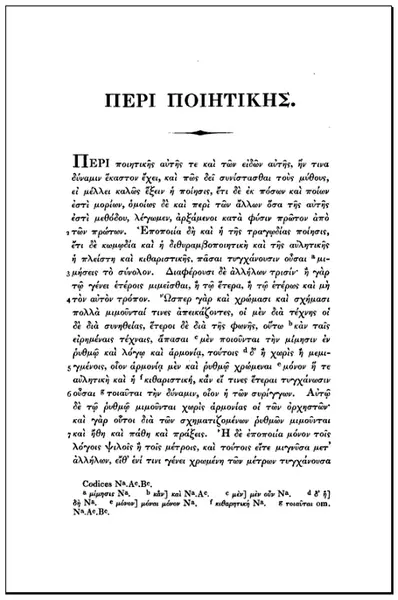
Περὶ ποιητικῆς Poetics

Nonfiction · -335

InfluenceHIGH

Oedipus Rex is Aristotle's model tragedy in the Poetics. He uses it as the best example of recognition coinciding with reversal, the messenger who comes to relieve Oedipus and instead reveals who he is, and of a plot so constructed that merely hearing it told arouses pity and fear.

Death of a Salesman

Play · 1949

Reaction againstMEDIUM

Miller published the argument. Tragedy and the Common Man appeared in the New York Times in February 1949, weeks after Salesman opened, and it is a direct answer to the critics who said a salesman was too small to be tragic. His case is that the classical requirement of rank is an accident of who was writing, not a law: the tragic feeling comes from a man laying down his life to secure his sense of personal dignity, and a salesman can do that as completely as a king. Willy's insistence that he is well liked is the flaw held in exactly the place Sophocles puts Oedipus's certainty. Recorded as a reaction rather than an influence because the play is written to contradict the model, and because Miller said so in print at the time.

What influenced Οἰδίπους Τύραννος (Oedipus Rex)

The works this one is recorded as drawing on.

About the work

Οἰδίπους Τύραννος (Oedipus Rex)

Prior to the start of Oedipus Rex, Oedipus has become the king of Thebes while unwittingly fulfilling a prophecy that he would kill his father, Laius (the previous king), and marry his mother, Jocasta (whom Oedipus took as his queen after solving the riddle of the Sphinx). The action of Sophocles' play concerns Oedipus' search for the murderer of Laius in order to end a plague ravaging Thebes, unaware that the killer he is looking for is none other than himself. At the end of the play, after the truth finally comes to light, Jocasta hangs herself while Oedipus, horrified at his patricide and incest, proceeds to gouge out his own eyes in despair. The play is thought to have been first performed c. 429 BC, although this is highly uncertain. Although the play won only second place at its initial performance, it was later considered by Aristotle to be one of the greatest Greek tragedies, and is now widely considered one of the greatest plays of Western literature, and the most famous of all Greek tragedies.