Film· 1939· Musical

The Wizard of Oz

by Victor Fleming, King Vidor

The Wizard of Oz: 2 recorded works trace back to it.

Open on the map

What The Wizard of Oz influenced

Works that record this one as a source, with the evidence a contributor gave.

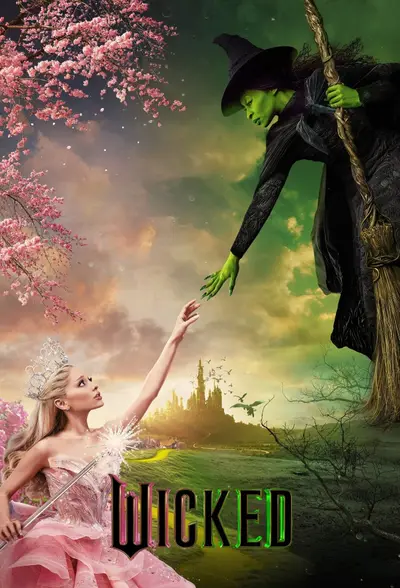
Wicked

Film · 2024

InfluenceHIGH

Wicked is built on the 1939 film rather than on Baum's novel, and the detail that proves it is the shoes. Baum wrote silver slippers; MGM made them ruby for Technicolor. Everything downstream, including this one, inherits the film's version. The story is a prequel to that film specifically: how the Wicked Witch of the West became wicked, why the Scarecrow, the Tin Man and the Lion are what they are, and what the Wizard actually is. It works as an argument only because the audience arrives already holding the 1939 film's account, which it then contradicts.
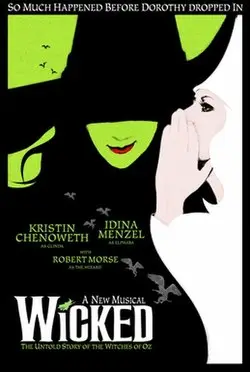
Wicked

Musical · 2003

InfluenceMEDIUM

The musical adapts Gregory Maguire's 1995 novel, which retells the story of Oz from the side of the Wicked Witch of the West, and it builds to the events the 1939 film made famous: the house falling on the Witch's sister, Dorothy taking the shoes, the Witch melting. Its central image comes from the film rather than from Baum: the Witch's green skin, which Maguire's novel and the musical both keep, was created for the 1939 film. Baum never gives her that colour.

About the work

The Wizard of Oz

Young Dorothy Gale and her dog Toto are swept away by a tornado from their Kansas farm to the magical Land of Oz and embark on a quest with three new friends to see the Wizard, who can return her to her home and fulfill the others' wishes. The Wizard of Oz is a 1939 American musical fantasy film produced by Metro-Goldwyn-Mayer. Based on the 1900 novel The Wonderful Wizard of Oz by L. Frank Baum, it was primarily directed by Victor Fleming, who left production to take over the troubled Gone with the Wind. The screenplay is credited to Noel Langley, Florence Ryerson, and Edgar Allan Woolf, but includes contributions from other writers. The film stars Judy Garland, Frank Morgan, Ray Bolger, Jack Haley, Bert Lahr, Billie Burke, and Margaret Hamilton. The music was composed by Harold Arlen and adapted by Herbert Stothart, with lyrics by Edgar "Yip" Harburg.