BookSeries· 1950· Fantasy

The Chronicles Of Narnia

by C. S. Lewis

The Chronicles Of Narnia: 4 recorded works trace back to it, and it draws on 3 recorded sources.

Open on the map

What The Chronicles Of Narnia influenced

Works that record this one as a source, with the evidence a contributor gave.

His Dark Materials

Book · 1995

Reaction againstHIGH

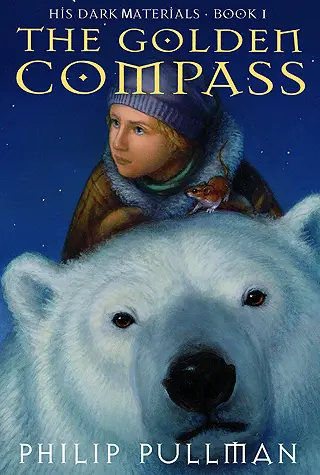
Philip Pullman has said that His Dark Materials was written partly in response to Lewis's Christian worldview. Factually, the influence includes: Thematic Influence (strongest): Pullman deliberately challenges the Christian themes of The Chronicles of Narnia. Where Lewis presents obedience, faith, and redemption positively, Pullman emphasizes free inquiry, individual choice, and skepticism toward religious authority. Narrative Influence: Both series feature children traveling between multiple worlds, but Pullman uses this structure to explore different philosophical questions. Genre Influence: His Dark Materials builds on the tradition of children's portal fantasy established by works such as The Chronicles of Narnia, while taking the genre in a more complex, secular direction. Foundational Influence: Pullman has described his trilogy as, in part, an answer to Lewis's series. Rather than imitating Narnia, he sought to offer an alternative moral and philosophical vision. Character Influence: Pullman's Authority and religious institutions can be read as inversions of Lewis's benevolent divine order, although they are not direct counterparts to individual Narnia characters. The influence is therefore best described as a critical response rather than an imitation. Pullman borrowed the broad framework of children's fantasy involving parallel worlds but intentionally reworked it to express ideas that contrast with those of Lewis.
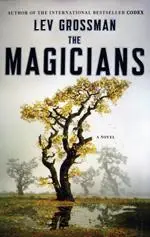
The Magicians

Book · 2009

InfluenceHIGH
  • Fillory - Narnia: The fictional magical land of Fillory in Grossman's universe is an explicit stand-in for Narnia. Like Narnia, Fillory was created by two animal gods (Ember and Umber, playing the role of Aslan) and is accessed by British siblings (the Chatwins, parallel to the Pevensies) who travel there from Earth through everyday portals (like a grandfather clock rather than a wardrobe).
  • The "Neitherlands": In The Magicians, the hub world connecting different dimensions via pools of water is a direct nod to the Wood Between the Worlds from C.S. Lewis’s The Magician's Nephew.
  • Tackling Morality and Trauma: Where Lewis used Narnia as a Christian allegory where good and evil are clear, Grossman reframes portal fantasy to examine clinical depression, addiction, sexual trauma, and the sobering reality that magic doesn't automatically fix internal human unhappiness.
  • From the author:
  • "My work on these books really began when I was 8 and I picked up The Lion, the Witch and the Wardrobe. I've always been deeply drawn to Lewis's work... I wrote the first draft of* The Magicians, and they went to Narnia, so it used to be much more directly an engagement with Narnia. I don't think of it as an homage or a critique; maybe it's both, I don't know. I always wanted to talk back to C.S. Lewis."*
Harry Potter

Book · 1997

InfluenceMEDIUM

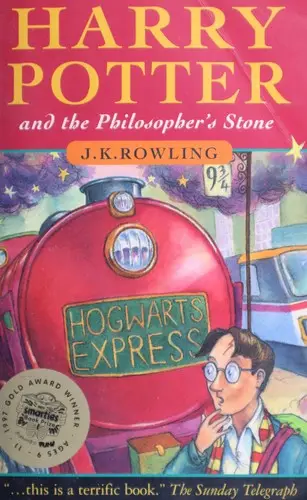
Narnia likely influenced Harry Potter indirectly by helping establish the modern tradition of children's fantasy in which young protagonists enter a magical world and confront profound moral choices. However, Rowling has not identified it as a primary source for her story or world, and Harry Potter ultimately develops its own distinct style, mythology, and narrative structure.

What influenced The Chronicles Of Narnia

The works this one is recorded as drawing on.

Bible Holy Bible

Scripture · 400

InfluenceHIGH

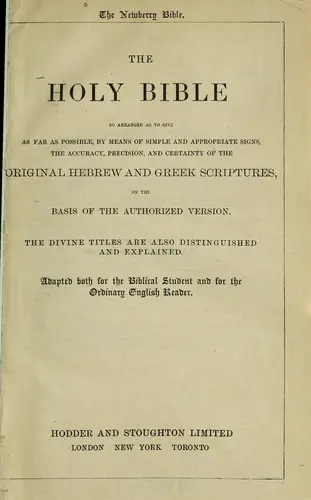
C. S. Lewis described the series as imagining how Christian ideas might appear in a different world rather than as a strict allegory. Factually, the Bible influenced Narnia in these ways: Thematic Influence (strongest): The series explores biblical themes such as creation, sacrifice, redemption, resurrection, temptation, forgiveness, judgment, and eternal life. Character Influence: Aslan is a fictional counterpart to Jesus Christ in the world of Narnia. His sacrificial death and resurrection in The Lion, the Witch and the Wardrobe parallel the crucifixion and resurrection of Christ. Narrative Influence: Several major storylines parallel biblical events. For example: The Magician's Nephew includes a creation story inspired by Genesis. The Last Battle draws on the Book of Revelation, depicting the end of Narnia, final judgment, and a new, perfect world. Worldbuilding Influence: Narnia has a moral order established by Aslan, reflecting the biblical concept of a universe created and governed by God. Foundational Influence: Christian theology forms the philosophical foundation of the series. Lewis stated that the books began with images rather than a plan to retell the Bible, but Christian belief shaped the world and its stories throughout.

The Worm Ouroboros

Book · 1922

InfluenceMEDIUM

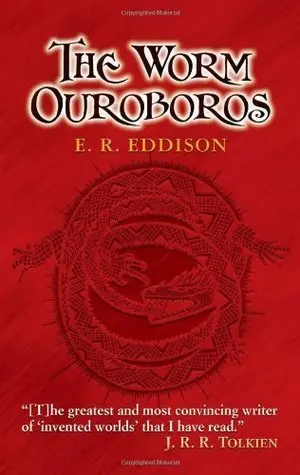
Lewis was one of Eddison's greatest champions. While Narnia itself doesn't closely resemble The Worm Ouroboros, Lewis's respect for Eddison reinforced his belief that fantasy could be serious literature and is part of his foundation into creating secondary fantasy worlds.

About the work

The Chronicles Of Narnia

This is a series.

The Lion, the Witch and the Wardrobe is the first published book and the most famous book of the saga: Four adventurous siblings—Peter, Susan, Edmund, and Lucy Pevensie—step through a wardrobe door and into the land of Narnia, a land frozen in eternal winter and enslaved by the power of the White Witch. But when almost all hope is lost, the return of the Great Lion, Aslan, signals a great change . . . and a great sacrifice. Journey into the land beyond the wardrobe! The 6th published book is actually the first one in the chronology: The Magician's Nephew. It follows Digory and Polly as they discover a secret passage that links their houses, and are tricked into vanishing out of this world and into the World of Charn, where they wake up the evil Queen Jadis. There, they witness the creation of the Land of Narnia, as it is sung into being by the Great Lion, Aslan. HarperCollins renumbered the books in 1994 based on their chronology, however the book numbering is still debated nowadays.